
I Am Gen Z

In the Classroom

I Am Gen Z in the classroom

A 52-minute edition of the film for secondary schools, with a full teaching pack. £200 + VAT for a three-year licence, with unlimited screenings in the classroom and private screenings for your school.

Order a licence Look inside the pack

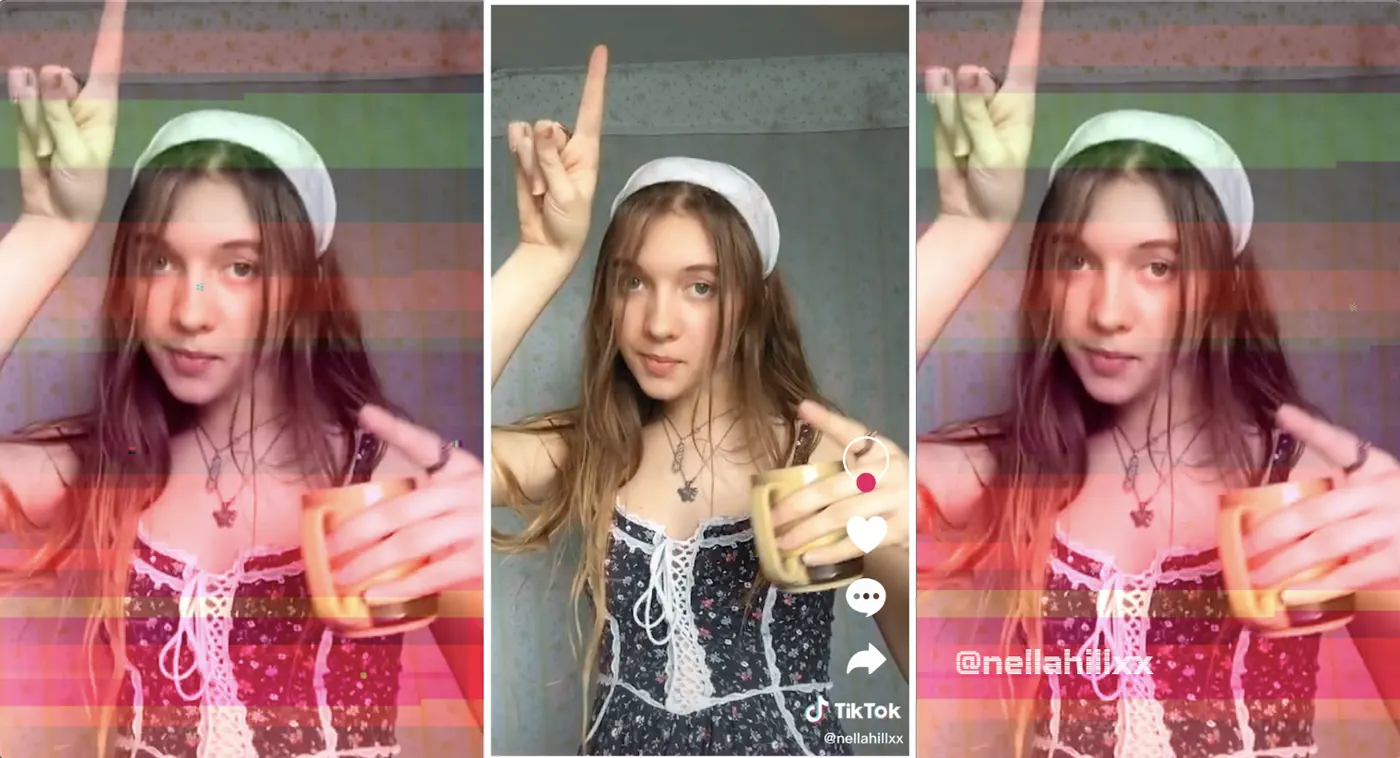
Noella, one of the Gen Z voices in the film, in stills from a social media video featured in the film.

Why now

The rules are changing. This film explains why.

From September 2026, schools in England are expected to be phone-free throughout the school day. In June 2026 the government announced that under-16s will be banned from social media from spring 2027. And the revised RSHE guidance, compulsory from this September, asks schools to teach about online harms, misinformation and AI.

I Am Gen Z gives students the reasons behind the rules, from their own generation in their own words, and from experts in psychology, neuroscience and technology. It explains how apps are designed to hold our attention, what that does to sleep, body image and mental health, and how algorithms amplify outrage and misinformation. And it ends with hope: a generation deciding what kind of world it wants.

“Sometimes you watch a film and wish it could be screened in every school, not just for the pupils but also their parents and teachers. This is one such film.”

Rehna Azim · Moviemarker · ★★★★
  • Winner, Best Feature Film, The Lower East Side Film Festival 2022
  • Official Selection, CPH:DOX 2021
  • Official Selection, Raindance Film Festival 2021

What you get

What’s included

The 52-minute edition

A version of the film made for the classroom, supplied as a download or to stream online. It divides into two parts of about 26 minutes, so it can be taught across two lessons.

A full teaching pack

A teacher briefing with safeguarding guidance and timecoded content notes, two lesson plans, 15 themes with quotes and discussion questions, phone-free activities and helplines. It’s online, and easy to print.

Updated for 2026

What has changed since the film was made: the Online Safety Act, phone-free schools, the under-16 social media ban and generative AI.

Subtitles

French, German and Italian subtitled versions are available for international schools and language classes.

Sample

Look inside the pack

The teaching pack is a web page your school can open and print. Here is what it contains, with the chapter guide and one of the 15 themes in full.

Contents

  1. 01 The film and your licence
    The 52-minute edition to download or stream, with French, German and Italian subtitles on request, and your licence terms.
  2. 02 Before you screen
    A teacher briefing: safeguarding checklist, timecoded content notes, how the film maps to the four areas of risk in KCSIE 2026, guidance on the most sensitive section, and a note on political impartiality.
  3. 03 The film at a glance
    16 chapters with timecodes, in two parts of about 26 minutes.
    Shown below
  4. 04 Curriculum links
    RSHE, PSHE, Computing, Citizenship, and English and Media Studies.
  5. 05 Lesson 1: Part one
    A 60-minute lesson plan with objectives, a starter, discussion questions and an activity.
  6. 06 Lesson 2: Part two
    A 60-minute lesson plan, with a route that skips the most sensitive section.
  7. 07 Themes, quotes and discussion
    15 themes, each with timecoded quotes from the film and discussion questions.
    One shown below
  8. 08 Classroom activities
    Six activities, none of which needs a phone.
  9. 09 Since the film was made
    The Online Safety Act, phone-free schools, the under-16 social media ban and generative AI.
  10. 10 Aldous Huxley in the film
    The six quotations the film uses, and where they appear.
  11. 11 The Greta Song
    Greta Thunberg’s words and Lottie Hartnack’s lyrics.
  12. 12 Support and helplines
    UK helplines to share with students.

The film at a glance

Timecodes are for the 52-minute edition. Part one runs from 00:00 to 26:01; Part two from 26:01 to the end.

PartFromSection
Part 100:00Opening
Huxley’s warning, the iPhone launch, and a first look at the questions the film asks.
Part 103:13Who are Gen Z?
The first generation to grow up with smartphones introduce themselves.
Part 105:10The attention business
Free services paid for with our attention and data; persuasive design; dopamine; likes.
Part 109:38The teenage brain and sleep
What happens in the adolescent brain, and why teenagers need nine hours’ sleep.
Part 111:44Dating and relationships
Swipes, DMs and the “tinderisation” of relationships.
Part 114:00Body image and the personal brand
Filters, catfishing and the pressure to curate a version of yourself.
Part 118:08Social cooling and surveillance
Always watched: privacy, data and facial recognition.
Part 122:35Anxiety and escape
Rising anxiety and depression, and phones as a way to avoid discomfort.
Part 226:01Self-harm, eating disorders and suicide
The most sensitive section of the film. See the content notes before screening.
Part 234:27Burnout and perfectionism
Always on, always achieving.
Part 237:33The law can’t keep up
Governments that are “decades behind” the technology.
Part 238:54Algorithms, outrage and extremism
How recommendation engines reward the extremes.
Part 241:32Post-truth and conspiracy theories
“Truth isn’t truth”, and why misinformation spreads.
Part 243:48AI and the future of work
Smarter machines, and what happens to jobs.
Part 246:07The system
Is our system fit for a digital world?
Part 247:432078: hope and activism
Gen Z answer Greta Thunberg. The film ends with Lottie Hartnack’s song.

A sample theme

Each of the 15 themes in the pack follows this format.

Sample from the teaching pack · Theme 2 of 15 · From 05:10

The attention business

Most social media is free because the product being sold is our attention. The film explains how platforms are designed to keep us using them.

“They want to connect everybody, but they want to do that using a business model which is based on trading your attention and building up a profile of you so they can serve you adverts.”

Jamie Bartlett, journalist and author · 06:04

“That particular model allows you to design any digital technology to trigger a dopamine response, watch the behavior and then reinforce it.”

Marc Atherton, psychologist and behavioural scientist · 06:40

“The Apple solution is like, here’s some Scotch tape for your pack of cigarettes, let’s tape the top up and let’s try not to smoke OK?”

Tim Kendall, former President of Pinterest · 08:00

Discussion

  • If an app is free, how does the company make money? What are you “paying” with?
  • Marc Atherton says notifications that arrive at random keep “your brain running in high gear”. Which features of the apps you know work like this?
  • Tim Kendall compares screen-time tools to taping up a pack of cigarettes. Is that fair? What would a genuinely helpful tool look like?

Age and curriculum

Who it’s for

Recommended for Year 10 and above (age 14+), and for Year 9 at the school’s discretion. It supports RSHE, PSHE, Computing, Citizenship, and English and Media Studies.

Content

A film that doesn’t look away

The film deals honestly with self-harm, eating disorders and suicide, and contains strong language. The teaching pack includes timecoded content notes, a safeguarding checklist, and guidance on showing or skipping the most sensitive section. It also maps the film against the four areas of online risk in Keeping Children Safe in Education 2026, including what the film does not cover.

£200 + VAT · three-year licence

Order a licence

Tell us about your school and we’ll send an invoice. Once it’s paid, we’ll send you access to the teaching pack, where you can download or stream the film. Schools outside the UK are very welcome.

The licence lets you show the film as often as you like in the classroom, and at private screenings for your school’s own purposes, such as for staff or parents. Screenings must be free and not advertised to the public. For anything else, such as the feature-length film or a ticketed or fundraising screening, tell us in the notes. Read the full licence terms.

Want to watch it before you buy? Choose “Request a preview link” below.

Invoices are issued by Swipe Left For Addiction Limited, which licenses the film. Already have a licence? Open the teaching pack.